Software-Development
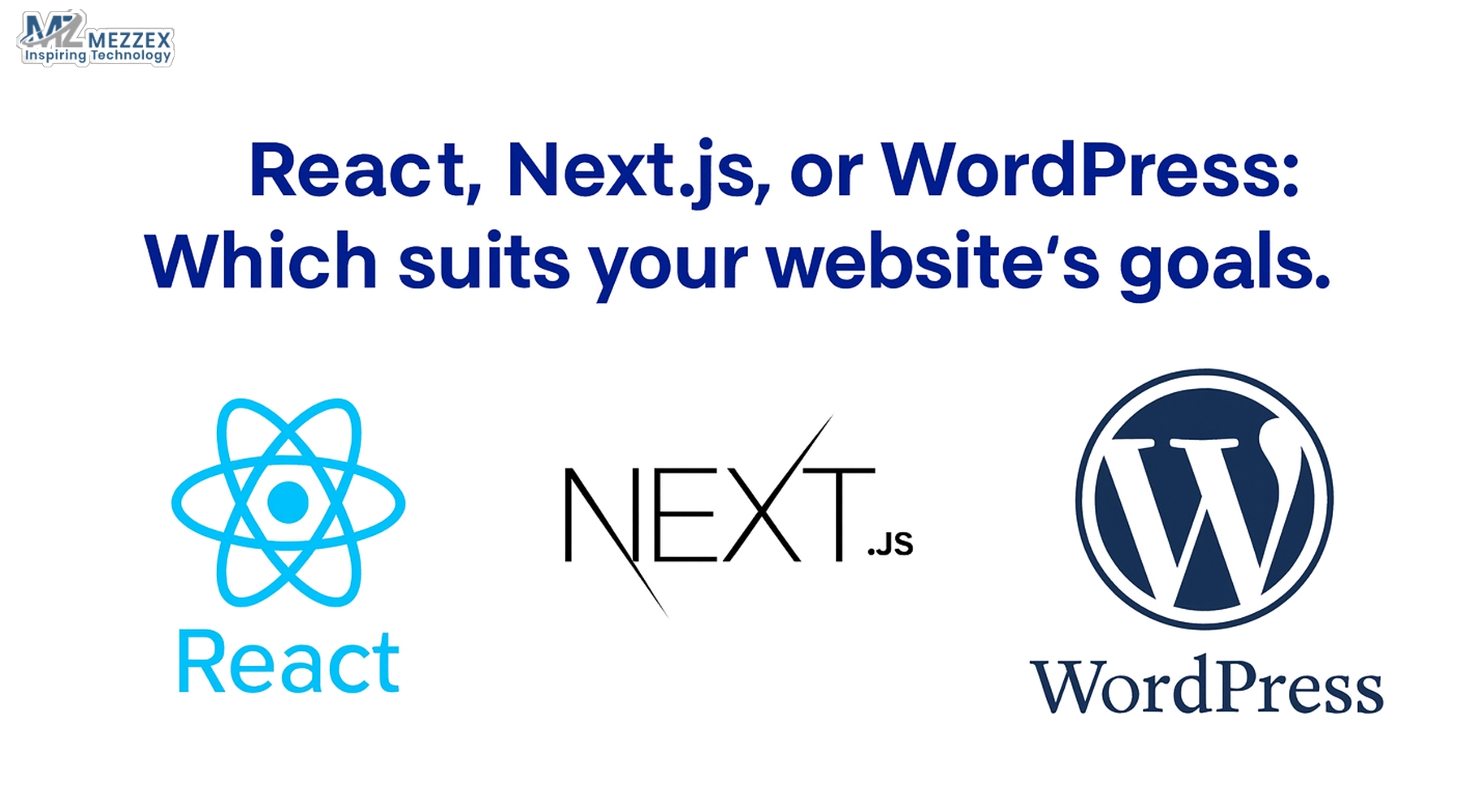
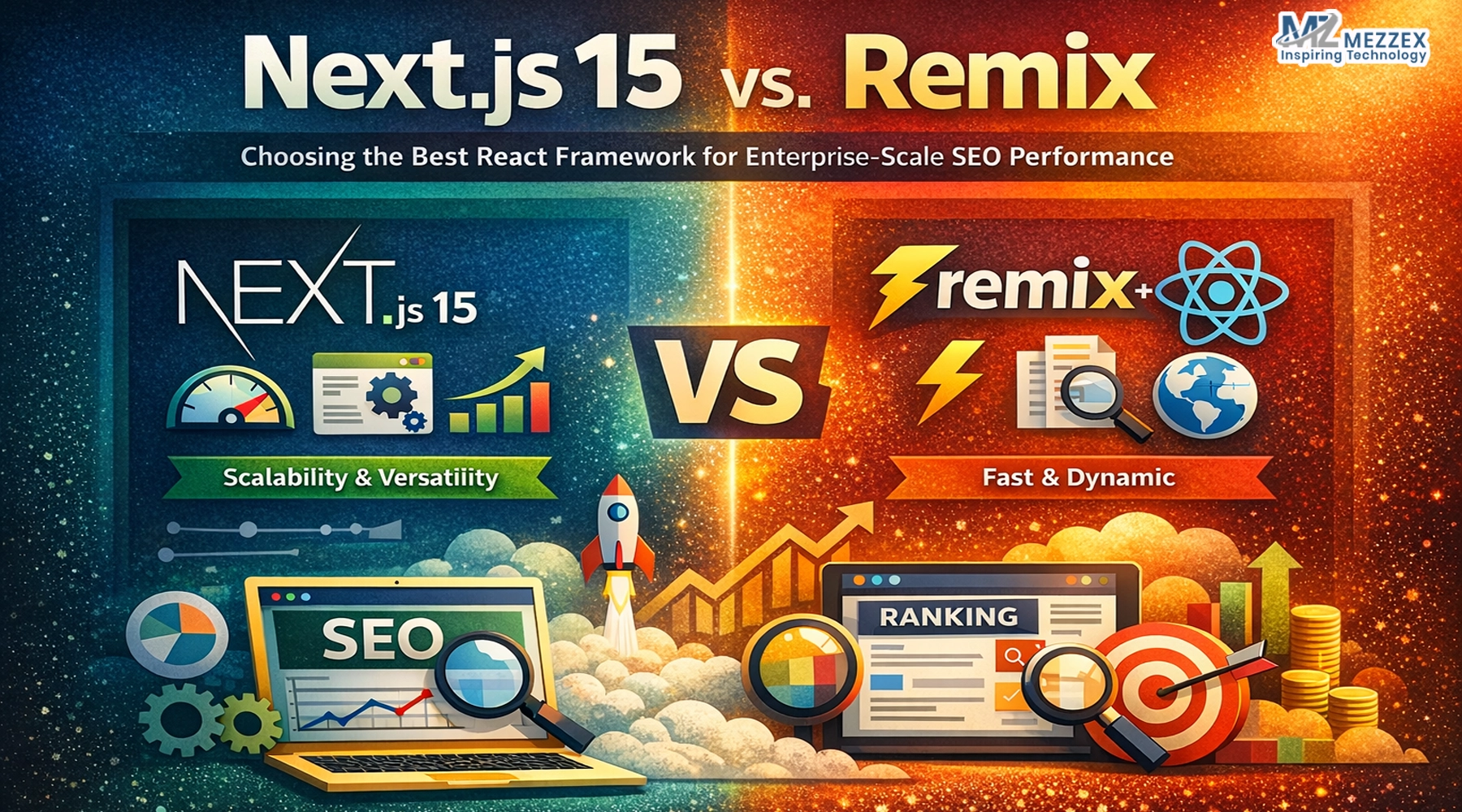
Next.js 15 vs. Remix: Choosing the Best React Framework for Enterprise-Scale SEO Performance.
Selecting a React framework for an enterprise application in 2026 requires a focus on technical resilience and search engine visibility. As React 19 becomes the industry standard, the competition between Next.js 15 and Remix (consolidated as React Router v7) defines how we build for the modern web. At Mezzex, we evaluate these frameworks based on their ability to deliver superior Core Web Vitals and manageable codebases at scale. Enterprise SEO depends on more than just meta tags; it requires optimal Time to First Byte (TTFB), stable Cumulative Layout Shift (CLS), and fast Interaction to Next Paint (INP). This guide analyses which framework provides the best foundation for your global digital presence.
Next.js 15 and the Command of Partial Prerendering
- Partial Prerendering (PPR) for Instant Loading: Next.js 15 introduces PPR to combine static and dynamic content. We use this to deliver an instant static shell to the user while streaming dynamic components into place. This architecture ensures search engine crawlers receive meaningful content immediately, which improves indexing speed.
- The React Compiler Integration: Next.js 15 supports the new React Compiler by default. It automatically optimises component rendering and removes manual memoisation. This reduction in overhead lowers the main-thread work, which directly improves INP scores for enterprise-scale UIs.
- Async Request APIs for Better Streaming: In version 15, APIs like headers and cookies become asynchronous. This change allows the server to start streaming the HTML response earlier. We reduce TTFB by ensuring the server does not wait for request-specific data before sending the initial page structure.
- Granular Caching Control: Next.js 15 moves away from "cache by default" for fetch requests. This requires developers to explicitly define caching strategies. For enterprise sites with frequently changing data, this prevents the delivery of stale content and ensures search engines always see the latest information.
- Incremental Static Regeneration (ISR) at Scale: For websites with millions of URLs, generating every page at build time is impossible. ISR allows us to update specific pages in the background without a full redeploy. This keeps large product catalogues fresh for Googlebot without sacrificing performance.
- Turbopack for Build Stability: The Rust-based Turbopack engine handles large-scale builds with high efficiency. We reduce development wait times and deployment cycles, allowing for faster SEO iterations and content updates across massive platforms.
Remix and React Router v7: The Standards-Based Approach
- Native Web Standards Focus: Remix utilises standard Web APIs like Fetch, Request, and Response. Our developers write code that mirrors how the browser works. This approach makes the application more resilient and easier to debug when troubleshooting crawlability issues.
- Single Fetch for Data Efficiency: The transition to React Router v7 introduces Single Fetch. This feature aggregates multiple data loaders into one network request during navigation. We eliminate data waterfalls, ensuring that even complex, nested pages load with minimal latency.
- Nested Routing for Error Isolation: Remix segments the UI into nested routes. Each segment manages its own data and error boundaries. If one data source fails, the rest of the page remains functional and indexable. This prevents a single API failure from tanking an entire page ranking.
- Progressive Enhancement as a Priority: Remix ensures that core functionality works without JavaScript. Links and forms use standard HTML behaviours. This guarantees that search engine bots, which sometimes skip heavy JavaScript execution, can still navigate and index the site structure.
- Optimistic UI for Perceived Speed: Built-in hooks allow the UI to update before the server confirms a data change. While this primarily impacts user experience, it reduces bounce rates—a secondary signal that search engines use to determine page quality.
- Platform Agnosticism for Deployment: Remix deploys to any environment, including Cloudflare Workers or AWS Lambda. We choose the edge network closest to your target audience to minimise physical distance latency and improve global SEO performance.
Core Web Vitals Comparison for Enterprise Sites
- Largest Contentful Paint (LCP): Next.js 15 uses Partial Prerendering to deliver the hero image and main text almost instantly. Remix uses parallel data loaders to ensure all critical content is ready at the same time. Both frameworks excel, but Next.js offers a slight advantage for static-heavy pages.
- Interaction to Next Paint (INP): The React Compiler in Next.js 15 reduces script execution time by optimising renders. Remix handles mutations through standard form actions, which keeps the main thread clear. Both methods protect the responsiveness of large-scale enterprise dashboards.
- Cumulative Layout Shift (CLS): Next.js 15 uses advanced image and font optimisation components to reserve space on the page. Remix relies on its nested routing structure to ensure that as data streams in, it does not push existing content around.
- Time to First Byte (TTFB): Remix loaders run in parallel by default, which often results in a faster initial server response for data-heavy pages. Next.js 15 async APIs and PPR seek to close this gap by sending the static shell before the data fetch completes.
- Hydration Performance: Next.js 15 supports Server Components, which do not hydrate on the client. This drastically reduces the amount of JavaScript the browser needs to process. Remix requires hydration for its interactive components but uses efficient streaming to manage the load.
Scalability and Data Handling for Global Brands
- Managing Massive URL Structures: Next.js 15 handles large-scale routing through its file-system-based router and ISR. It is the proven choice for e-commerce sites with hundreds of thousands of individual SKU pages that require consistent SEO indexing.
- Internationalisation (i18n) Support: Next.js provides built-in support for locale-based routing. For global enterprises, this simplifies the process of serving correct content to different regions, which is a key component of international SEO.
- Middleware at the Edge: Both frameworks support edge middleware. We use this to handle authentication, geo-location redirects, and A/B testing before the request reaches the main server. This keeps the user experience fast and consistent across global markets.
- Security and Data Privacy: Enterprise SEO requires a secure site with proper headers. Both frameworks provide easy integration for security headers and protected routes. Remix's focus on Web Standards often makes it easier to implement strict Content Security Policies (CSP).
- Reliability through Type Safety: The deep TypeScript integration in both frameworks ensures that data contracts between the frontend and backend remain intact. We prevent runtime errors that lead to "404" or "500" errors, which damage search rankings.
Strategic Decision Matrix for Engineering Teams
- Choose Next.js 15 if: You manage a massive e-commerce catalogue, require Incremental Static Regeneration, or want the most advanced integration with React 19 Server Components. It is the best choice for sites where raw initial load speed for static content is the top priority.
- Choose Remix (React Router v7) if: You build complex, data-heavy dashboards, prioritise Web Standards, or require deployment flexibility across multiple cloud providers. It excels in applications with many nested views and high interaction levels.
- Consider the Team Expertise: A team proficient in standard Web APIs finds Remix intuitive. A team already embedded in the Vercel or Next.js ecosystem benefits from the integrated nature of Next.js 15.
- Infrastructure Requirements: If you are committed to a specific hosting provider like AWS or Cloudflare, Remix offers a more agnostic path. If you want a managed, high-performance environment, the Next.js and Vercel combination remains the industry benchmark.
ELEVATE YOUR ENTERPRISE STACK WITH MEZZEX
Building for enterprise-level SEO requires an architectural partner that understands the nuances of modern React frameworks. At Mezzex, we provide the professional infrastructure and technical expertise to help you choose between Next.js 15 and Remix based on your business goals. We focus on delivering high-performance, scalable applications that satisfy both users and search engines. Whether you need the scalability of ISR and Partial Prerendering or the standards-driven reliability of nested routing, our engineering team ensures your project stands on a stable foundation. We help you navigate React 19 to achieve superior Core Web Vitals and long-term success. Experience a development partnership that prioritises your technical leadership.
- Consult Mezzex Development Services: https://mezzex.com/
- Request a Technical Stack Audit: Evaluate your current architecture for SEO bottlenecks.