Digital-Marketing
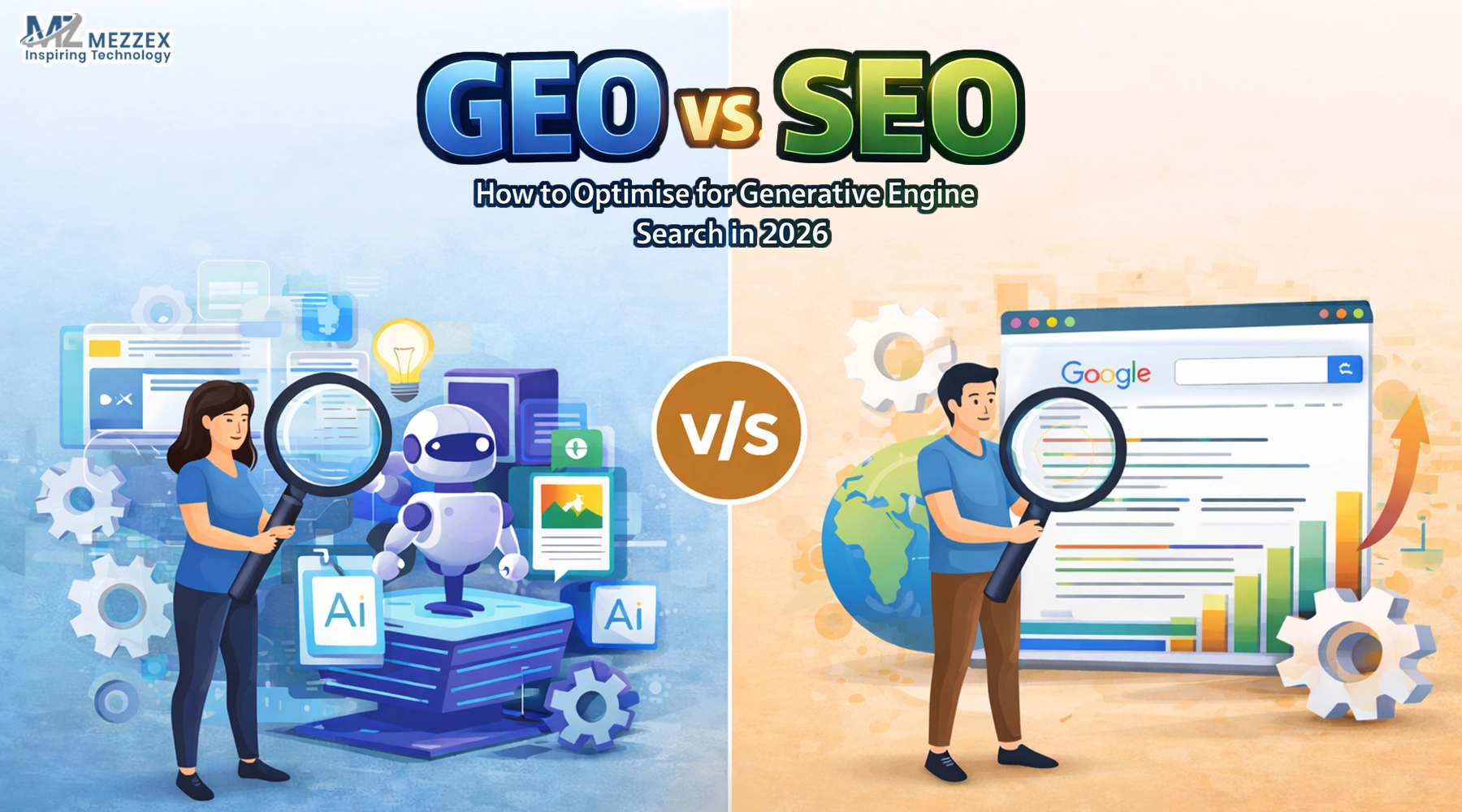
GEO vs. SEO: How to Optimise for Generative Engine Search in 2026
Search changes faster than most businesses prepare for it. Generative engine search now delivers complete answers before users reach traditional results. Teams that master only keyword rankings lose ground when AI systems answer queries directly. Visibility splits between clickable links and extracted citations. Businesses face a clear choice: adapt content for both paths or accept lower presence in 2026 search environments. This guide covers GEO vs SEO directly. It shows how to structure digital assets so AI engines cite your brand alongside core rankings.
Why SEO Alone No Longer Explains Search Visibility
- Traditional SEO secures page positions through keyword density, backlink profiles, and technical signals that drive users to specific landing pages.
- AI overviews sit above organic results and resolve most user intent without requiring clicks, so page-one traffic drops when answers appear immediately.
- Visibility now measures brand presence inside those AI summaries rather than solely organic click volume from lower positions.
- Teams track impression share differently because users read generated text and exit without engaging further content.
- Keyword strategies overlook zero-click searches where AI extracts facts from multiple sources to build one response.
- Site owners notice engagement metrics shift as referral traffic declines from queries handled entirely on the results page.
- Modern dashboards prioritise AI citation frequency over traditional dwell time or bounce rate patterns.
- Forward-thinking marketers audit SERP layouts weekly to identify which queries trigger generative responses instead of link lists.
What GEO Actually Means In 2026
- Generative Engine Optimisation formats content so that large language models can extract precise facts for direct user answers across platforms.
- Teams shift from crawler-friendly pages to model-readable structures that support query fan-out across related subtopics simultaneously.
- GEO demands explicit statements positioned early because AI prioritises front-loaded clarity over buried context in long-form articles.
- Developers embed schema markup that defines entities clearly, helping models distinguish between similar brands or service types instantly.
- Content creators build topical authority through interconnected pages that reinforce core expertise without duplicating explanations.
- Writers craft sentences that model the process without rephrasing, using active constructions and defined terms from the first mention.
- Marketers position brands consistently across channels so AI systems associate specific capabilities with recognised company names reliably.
- Strategy focuses on extraction patterns where models pull quotes, statistics, and comparisons directly into generated responses.
GEO vs SEO: What Is The Real Difference?
- SEO engineers traffic through competitive rankings, where position determines click probability and conversion potential.
- GEO engineers' citations where brand names appear inside AI answers, regardless of underlying page position.
- Traditional optimisation chases search volume around high-traffic terms with established commercial intent.
- Generative optimisation chases semantic clusters where models synthesise information across low-volume questions with high specificity.
- SEO success shows through analytics tracking sessions, conversions, and revenue attribution from organic channels.
- GEO success shows through monitoring tools that count brand mentions within AI-generated content across search platforms.
- Link building elevates domain trust for better crawl budget and index priority in classic systems.
- Mention building creates entity recognition where models reference companies as solutions without requiring hyperlinks.
- Page-level targeting drives users to service descriptions through precise match types.
- Entity-level targeting establishes business identity across topics so models recommend brands contextually.
How Google’s AI Search Features Change The Rules
- Query fan-out splits complex prompts into parallel searches that pull supporting facts from diverse page types simultaneously.
- Deep pages like technical blogs and FAQ clusters surface more frequently than optimised homepages in generated responses.
- Cross-source synthesis constructs answers from consensus patterns, reducing reliance on any single authoritative domain.
- Publishers experience referral declines when AI resolves intent using extracted snippets instead of full page loads.
- Brands gain an advantage through distributed expertise across niche pages that address specific user questions directly.
- Algorithms weigh source recency alongside relevance, prioritising fresh insights over evergreen keyword pages.
- Response construction favours content with verifiable claims, structured formats, and clear attribution signals.
- Interface evolution positions AI summaries above traditional results, capturing attention before scroll behaviour begins.
What Content Performs Better In Generative Search
- Direct question-answer formats place solutions first, matching how models scan for immediate resolution points.
- Comparison tables evaluate options across criteria, giving AI clear frameworks to summarise trade-offs objectively.
- Step-by-step processes outline implementation paths, enabling models to extract actionable sequences reliably.
- Expert commentary provides unique perspectives that generic pages cannot replicate in generated text.
- Data-backed claims include sources and methodology, building trust signals that models prioritise over unsubstantiated statements.
- Scannable structures use headers, lists, and bolded terms that segment information for efficient processing.
- Chronological explanations trace concept evolution, helping models contextualise current best practices accurately.
- Case study examples demonstrate outcomes with metrics, offering concrete illustrations for AI reference points.
Technical Foundations Still Matter More Than Ever
- Core indexing rules apply universally, making crawl efficiency the baseline requirement for any generative visibility.
- Clean architecture organises information hierarchically so internal links guide models through related concepts systematically.
- Schema implementation tags entities explicitly, enabling precise knowledge graph connections across platforms.
- Loading performance maintains session continuity, preventing timeouts during extended model evaluation cycles.
- Mobile optimisation ensures content accessibility matches global usage patterns across device types.
- XML sitemaps prioritise high-value pages, directing limited crawl budget toward GEO-critical assets first.
- Canonical tags resolve duplicate signals, preventing models from confusing similar content versions.
- robots.txt configurations balance discoverability with protection, maintaining index eligibility without overexposure.
Why Brand Citations Matter In AI Search
- Models reference familiar entities when constructing responses, favouring brands with established topic associations.
- Third-party mentions validate expertise through external consensus, creating trust patterns independent of owned content.
- Unlinked references carry equal weight to hyperlinks, shifting authority signals from link graphs to mention networks.
- Industry directories and analyst reports establish baseline recognition that models carry across queries.
- Peer endorsements reinforce positioning, making niche leadership claims more credible during response generation.
- Consistent naming conventions across platforms strengthen entity matching, reducing confusion with similar businesses.
- Citation frequency correlates with recommendation likelihood, as models prefer proven references over unknowns.
- Monitoring tools track impression share within AI outputs, quantifying visibility beyond traditional traffic metrics.
How Businesses Should Optimise For GEO In 2026
- Topic clusters map complete question sets around core services, covering intent variations that fan-out queries trigger.
- Front-loading places definitive answers within scrolling distance, maximising extraction probability from initial scans.
- Entity optimisation clarifies business identity through consistent signals across pages, profiles, and external references.
- Legacy audits identify thin content blocking crawl paths, replacing vague pages with precise authority assets.
- Mention outreach secures coverage from niche publications, building off-site recognition without reciprocal links.
- Structured data refresh tags evolving services accurately, keeping knowledge representations current for models.
- Internal linking reinforces topical pathways, showing AI systems how expertise connects across business functions.
- Performance monitoring correlates AI citations with business outcomes, guiding resource allocation to high-impact topics.
Why GEO And SEO Work Better Together
- Technical SEO creates the indexed foundation that makes GEO content discoverable to processing models.
- Keyword research identifies clusters where generative responses form, directing content investment strategically.
- Link authority amplifies page trust, increasing selection probability during AI source evaluation phases.
- Citation tracking reveals gaps where traditional rankings underperform despite strong organic positions.
- Unified dashboards combine traffic data with AI mention metrics for complete visibility assessment.
- Content calendars balance evergreen SEO assets with timely GEO pages targeting emerging query patterns.
- Teams coordinate on-site optimisation with off-site authority building for maximum ecosystem impact.
- Strategy integration prevents siloed efforts that waste budget on competing visibility channels.
How Mezzex Builds Search Foundations
- Web development delivers clean architecture with optimised crawl paths and mobile-first rendering standards.
- Software engineering integrates structured data natively, making service details machine-readable from deployment.
- Custom APIs synchronise business information across platforms, eliminating entity confusion signals.
- E-commerce platforms embed schema for products, pricing, and availability, supporting dynamic AI extraction.
- Digital marketing teams audit content pipelines for generative compatibility during campaign planning.
- Application development connects CRM data to public pages, ensuring factual consistency across touchpoints.
- Warehouse management systems expose operational metrics, positioning logistics capabilities accurately.
- The delivery model combines UK strategy oversight with offshore execution scale for rapid GEO adaptation.
Optimise For Both Search Layers Now
Generative search reshapes digital competition. Businesses require platforms engineered for extraction and ranking simultaneously. Mezzex builds websites, applications, and e-commerce systems with GEO and SEO foundations from the start. Teams deliver web development, software solutions, and digital infrastructure that position brands for AI citations alongside traditional traffic. Contact Mezzex at contact@mezzex.com or +44 121 794 3696 to audit current search performance. Schedule technical review of architecture, content structure, and entity signals. Align digital assets with 2026 generative engine search requirements through proven IT delivery. Start the process today.