Website-Designing
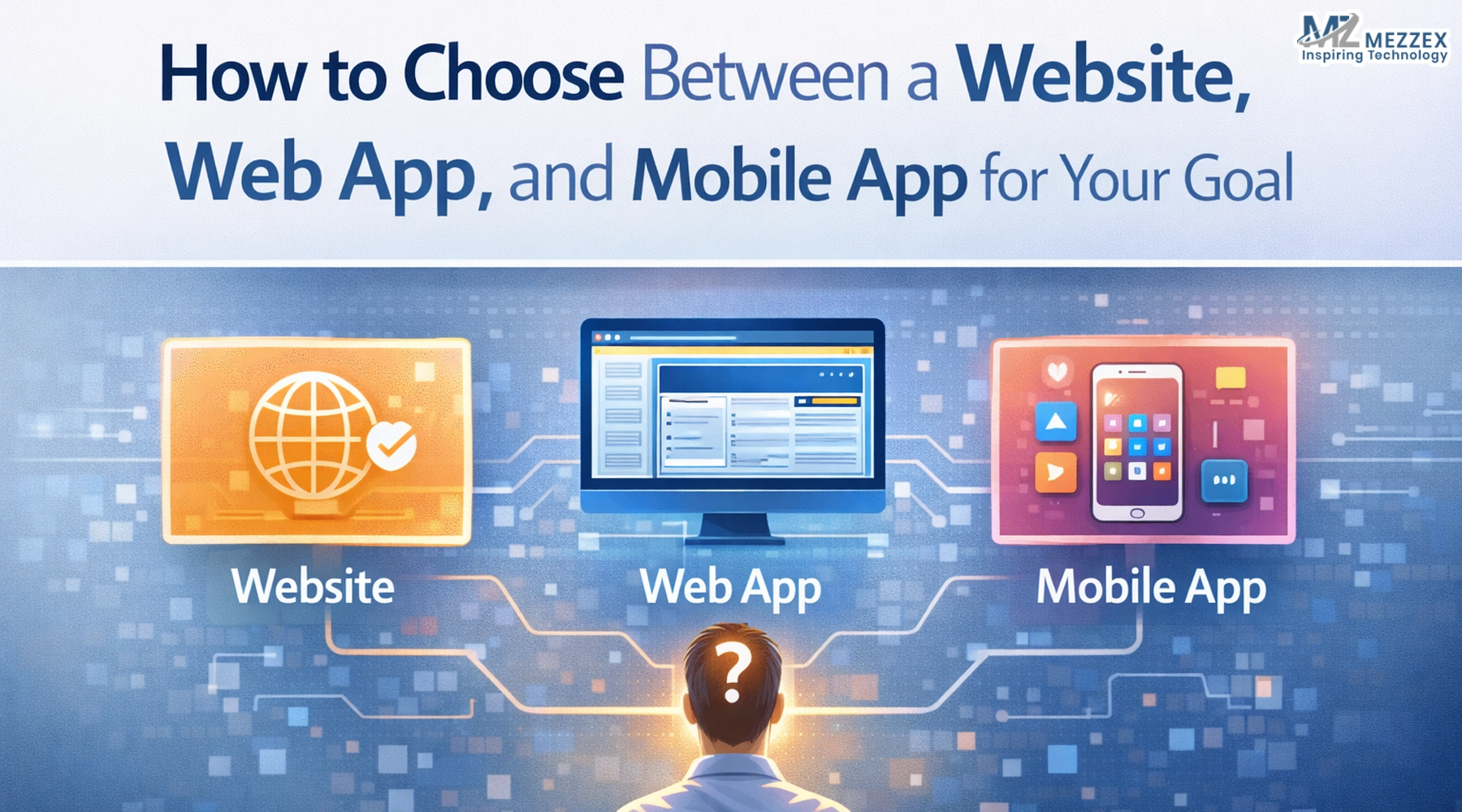
How to Choose Between a Website, a Web App, and a Mobile App for Your Goal
Starting a digital project always leads to the same question: build a website, a web app, or a mobile app. The right answer depends on the goal of the project, not just on budget or personal preference. A marketing site does a different job from a customer portal, and a high-use operational tool behaves very differently from a simple brochure site. Choosing the wrong format leads to wasted spend on features that are never used, or a platform that cannot deliver the tasks users expect. This guide helps teams pick the right build type first, then align the platform and tech stack with long-term business growth.
Define Your Core Project Goal
- Lead generation: Use a website as the primary asset, with focused landing pages, forms, and tracking that turn search and paid traffic into qualified enquiries. When the strategy later shifts to logged-in experiences, add web app features such as gated content areas, client dashboards, or partner zones on top of the same domain.
- Online sales: Start with an e-commerce website so products, pricing, promotions, and payment flows are in one place and easy to manage. As the store volume grows, add automation such as stock sync with back-office systems, abandoned basket flows, and order-status notifications rather than jumping straight into a custom app.
- Manual work reduction: Lean toward a web app or custom browser-based software when teams currently work in spreadsheets, email threads, and manual copy-paste between systems. The right build replaces that fragmented work with roles, workflows, and dashboards that show live data and let staff complete tasks without leaving the tool.
- Customer self-service: Choose a web app portal or a mobile app when customers or partners must log in, check information, update details, and raise requests without contacting support. The decision between web and mobile depends on how often accounts are used, which devices are standard in that audience, and whether tasks involve longer sessions or quick check-ins.
- Speed to launch: Prefer a website or a lightweight web app MVP when the goal is to test an idea, gather feedback, and prove value fast. Additional layers, such as a full-scale mobile app, only make sense once usage patterns, conversion data, and repeat behaviour show that a deeper investment will return clear value.
When Websites Drive Results
- Content leads the product: A website fits best when service descriptions, case studies, brand story, and educational content do most of the work. The build focuses on information architecture, SEO-friendly landing pages, and trust signals such as testimonials, reviews, and industry badges.
- Action is simple: A website is the natural choice when core journeys are straightforward, such as reading about services, submitting an enquiry, requesting a quote, or booking a consultation slot. The design then emphasises clear navigation, contact options, and forms that remove friction rather than complex tools or multistep workflows.
- Teams need editing control: A WordPress build works well when the marketing team wants to publish and edit pages without opening a support ticket. Mezzex designs custom themes, reusable blocks, and tailored plugins so non-technical editors can update content, add sections, and run campaigns while development time stays focused on new features.
- Publishing often happens: A CMS-driven website is the right fit when multiple teams manage blogs, landing pages, and resource libraries regularly. Mezzex supports major platforms like WordPress, Joomla, and Shopify, configuring roles, approvals, and content workflows so frequent publishing does not damage site structure or performance.
When Web Apps Handle Workflows
- Users need accounts: A web app is the natural format when individual users require secure profiles, specific roles, and permissions that control what they can see and change. Typical examples include staff management tools, client portals, internal CRMs, and any system where audit trails and activity logs matter.
- Work happens in a browser: A web app is a tool that teams open alongside email, documents, and other web systems during the working day. Booking platforms, B2B order systems, support desks, and operations dashboards all benefit from running in the browser with no installation or app store process required.
- Portals connect businesses: B2B portal development becomes a full web app when it includes secure logins, multi-organisation account structures, order history, invoices, credit limits, and real-time status updates. Integrations with existing ERPs, CRMs, or payment gateways then make it the central place where partners and suppliers manage their relationships.
- Processes are complex: .NET technology is a strong option for web applications that handle heavy data loads, layered approval flows, and detailed business rules. It supports modular builds, stable performance under load, and integration with enterprise systems, making it suitable for organisations with complex internal processes.
When Mobile Apps Win Engagement
- Usage is frequent: A mobile app fits when users return several times a day or week and benefit from immediate access via a home-screen icon. Typical examples include loyalty apps, delivery tracking, fitness, productivity tools, and services where notifications and quick checks matter.
- Interaction is mobile-first: Choose a mobile app when the experience relies on capabilities such as camera use, GPS, offline storage, or background syncing that a browser cannot handle as smoothly. The interface then focuses on thumb-friendly controls, short flows, and safe handling of sensitive data on personal devices.
- Reach spans devices: Cross-platform app development makes sense when the audience sits across iOS and Android, and the core feature set is shared between them. Using frameworks like Flutter or React Native allows one codebase to deliver a consistent experience on both platforms, while still leaving room for native enhancements where needed.
Phased Build Strategy
- Phase 1 builds the foundation: The first stage concentrates on a website that clearly explains the offer, collects leads or sales, and builds search visibility. This layer gives the business a stable base of visitors and data before heavier development starts.
- Phase 2 adds function: Once patterns in leads, orders, or internal requests are clear, the next step is to add web app modules such as login areas, self-service dashboards, and process automation. This phase turns repeated manual work into structured workflows that live behind the website.
- Phase 3 expands reach: When a defined user group starts to rely on the system daily and expects on-the-go access, the project moves into mobile app delivery. High-frequency journeys, such as approvals, status checks, or quick submissions, then move into native or cross-platform mobile apps.
- Delivery matches the stage: This phased route lines up with the Mezzex delivery model, which can start with fixed-scope sprints for the website, move into ongoing retainers for web app enhancements, and scale up to dedicated teams once mobile and continuous improvement are in play.
Tech Stack by Project Type
- WordPress: This choice points to a content and marketing focus, where fast page creation, blog publishing, landing pages, and SEO updates matter most. It suits organisations that need predictable development cycles and strong editorial control.
- Shopify and e-commerce: This stack fits when the main goal is to sell products online, manage catalogues, run promotions, and process secure payments. Built-in reporting, app integrations, and payment options then help the business refine conversion and average order value.
- .NET technology: This option fits complex web applications that run large workflows, advanced permissions, and integrations with existing enterprise systems. It is well-suited to organisations that expect high traffic, formal governance, and long-term evolution of their internal tools.
- PHP development: PHP frameworks support dynamic websites, custom CMS solutions, and flexible web applications that do not require full enterprise weight. They work well for mid-sized platforms that still need integrations, user management, and tailored content models.
- UI design and development: This layer applies to websites, web apps, and mobile apps, and covers layout systems, component libraries, and interaction patterns. Mezzex treats UI as a practical tool, ensuring each screen is intuitive to scan, efficient to use, and consistent across devices.
- Modern stack choices: Technologies such as React, Next.js, Flutter, and modern design tools appear in delivery plans when speed, interactivity, and cross-platform consistency are priorities. They help teams iterate quickly, experiment safely, and keep performance and usability high as the product grows.
Quick Format Decision Checklist
- Check SEO needs: If search traffic and content discovery drive growth, choose a website first, then layer in web app features later behind logins if needed.
- Check user tasks: If accounts, roles, dashboards, and approvals are required to get real work done, a web app should sit at the centre of the build.
- Check mobile usage: If the main journeys rely on notifications, offline access, or on-device features and happen several times each week, a mobile app becomes the primary format.
- Check sales goals: If online sales are urgent, start with an e-commerce website, refine conversion and operations there, and introduce deeper automation once order volume and repeat patterns are clear.
- Check partner needs: If a key part of the strategy is connecting businesses, suppliers, or distributors securely in one shared environment, plan for a B2B web portal as the core system.
Mezzex Delivery Approach
- Discovery workshops: Mezzex runs structured discovery sessions that clarify goals, users, workflows, and constraints before any format decision is fixed. The output is a recommended path—website, web app, mobile app, or a phased combination—with a clear rationale.
- Sprint-based delivery: Work then runs in sprints that prioritise the highest-value features first, with regular demos and backlog visibility. This keeps stakeholders close to progress and reduces the risk of building low-impact functionality.
- Engineering-led quality: The engineering team uses modern practices such as automated testing, continuous integration and deployment, and code reviews so each release remains stable, scalable, and maintainable. This focus on quality protects future phases and integrations.
- Flexible delivery models: Depending on stage and budget, Mezzex can work on fixed-scope projects, rolling retainers, or embedded dedicated teams. The model adjusts as the product grows, so the organisation always has the right level of support.
Call us today to book a free consultation
Book a free consultation with Mezzex to choose the right format for your next digital project. Call +44 121 661 6357 or email info@mezzex.com to schedule a focused 20-minute discovery session with a specialist. Arrive with a clear goal, main user group, and key workflow, and leave with a recommended format and a high-level delivery plan. Take this step now so development starts on the right path, not with an expensive rebuild later.