Software-Development
Why API-First Development is Critical for Connecting Your Complex Business Systems
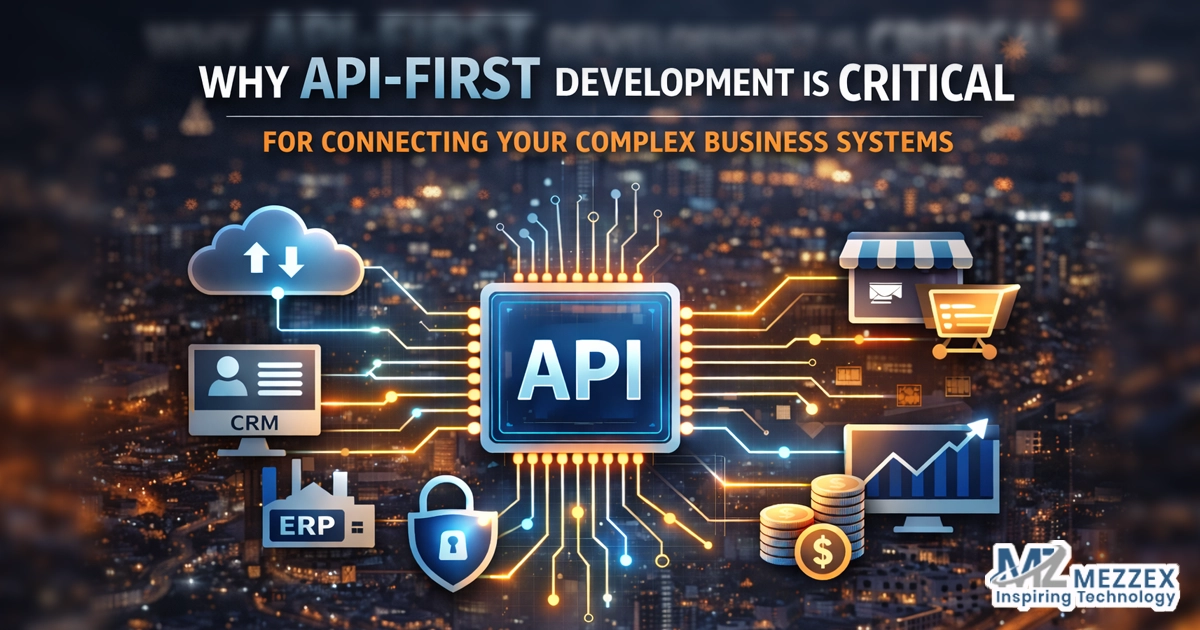
In the modern enterprise, the "monolithic" software approach is a relic of the past. As businesses scale, they accumulate a sprawling ecosystem of disparate tools: ERPs for logistics, CRMs for sales, and specialised SaaS platforms for everything from HR to financial reporting. The challenge is no longer just building these systems, but ensuring they talk to each other effectively. This is where API-first development becomes a non-negotiable strategy for technical resilience.
Establish Technical Certainty Through Contract-First Design
- Eliminate integration surprises by defining data schemas upfront using OpenAPI or Swagger specifications. This ensures all stakeholders agree on the "rules of engagement" before development begins.
- Enforce universal data standards across the entire stack so that requests from legacy servers and modern mobile apps remain uniform. This removes the need for high-maintenance middleware.
- Validate system interoperability by running compatibility tests against the design itself to identify logic flaws early. Proactive detection saves hundreds of hours in downstream debugging.
Compress Innovation Cycles with Parallel Development Streams
- Utilise mocking servers to simulate the live environment immediately after locking the API contract. Front-end teams can build the user experience while back-end teams simultaneously develop the functional logic.
- Reduce rework significantly by formalising architectural specifications at the start of the project. Teams move forward with total confidence in the data structure, accelerating time-to-market.
- Decouple workflows to allow internal teams to work in silos without losing alignment. As long as the API contract is respected, you can swap technologies without breaking interconnected systems.
Architect for Scalability via Headless and Omnichannel Logic
- Future-proof your presentation layers by decoupling core business logic from the user interface. Deploy new mobile apps or IoT interfaces without ever touching the underlying database or business rules.
- Enable ecosystem monetisation by building infrastructure that is extensible by design. A well-documented API is inherently ready for external partnerships with global logistics providers or third-party developers.
- Simplify cloud migrations by shielding legacy systems with a robust API layer. This allows you to migrate back-end infrastructure in stages while front-end applications continue to function without interruption.
Secure the Enterprise Perimeter with Governance-By-Design
- Centralise security governance by implementing universal authentication protocols like OAuth2 across every entry point. Every data request follows rigorous security standards, regardless of the system it touches.
- Implement precise data masking and scoping to control exactly what data is exposed to specific users. Defining "scopes" within the API contract protects sensitive corporate information from over-exposure.
- Elevate the developer experience (DX) with comprehensive, up-to-date documentation that is a natural byproduct of the design phase. High-quality documentation allows teams to reuse code modules efficiently.
Optimise Resource Allocation and Reduce Operational Costs
- Lower total cost of ownership by creating reusable API assets that serve multiple applications. Instead of building new integrations for every project, leverage existing endpoints to save development hours.
- Streamline maintenance by centralising the communication logic into a single, well-defined layer. Updating one API endpoint propagates changes across all connected systems, reducing the risk of version mismatch.
- Enhance system observability by monitoring API performance at the interface level. This provides clear insights into system health and allows IT teams to address latency issues before they impact users.
Improve Data Integrity and Transaction Reliability
- Enforce strict data validation at the API gateway to ensure only clean, formatted data enters your core systems. This prevents "garbage-in, garbage-out" scenarios that often plague complex business databases.
- Synchronise real-time updates across disparate platforms by utilising webhooks and event-driven API triggers. This ensures the CRM, ERP, and warehouse systems always reflect the most current state.
- Audit every data exchange through centralised logging built into the API layer. This creates a transparent trail of all system interactions, which is critical for compliance and troubleshooting.
Facilitate Seamless Third-Party Software Integration
- Adopt a "pluggable" architecture where third-party SaaS tools can be swapped out easily. Using standardised APIs prevents vendor lock-in and allows your business to adopt better technology as it emerges.
- Standardise partner onboarding by providing a clear, documented gateway for external data exchanges. This reduces the time required to link your systems with external suppliers or retail marketplaces.
- Consolidate disparate data streams into a unified API dashboard for better business intelligence. This provides a holistic view of operations by aggregating data from various third-party services.
Support Continuous Deployment and Technical Agility
- Enable microservices architecture by using APIs as the communication fabric between small, independent services. This allows your IT team to update specific business functions without redeploying the entire system.
- Foster innovation by allowing developers to experiment with new front-end frameworks without affecting back-end stability. The API acts as a constant, reliable anchor during periods of rapid technological change.
- Ensure long-term resilience by building a modular system that can adapt to changing market requirements. API-first design provides the structural flexibility needed to pivot your digital strategy instantly.
Optimise Your Technical Infrastructure
Mezzex specialises in building robust, API-driven solutions that simplify the management of complex business systems. We help you eliminate operational silos and build a scalable digital environment designed for high-performance growth. Stop struggling with brittle integrations and start building for the future. Contact our technical team today at +44 121-6616357, or email us at [email protected] to discuss your custom development strategy.