Digital-Marketing
5 Technical SEO Mistakes Developers Make During a Website Migration
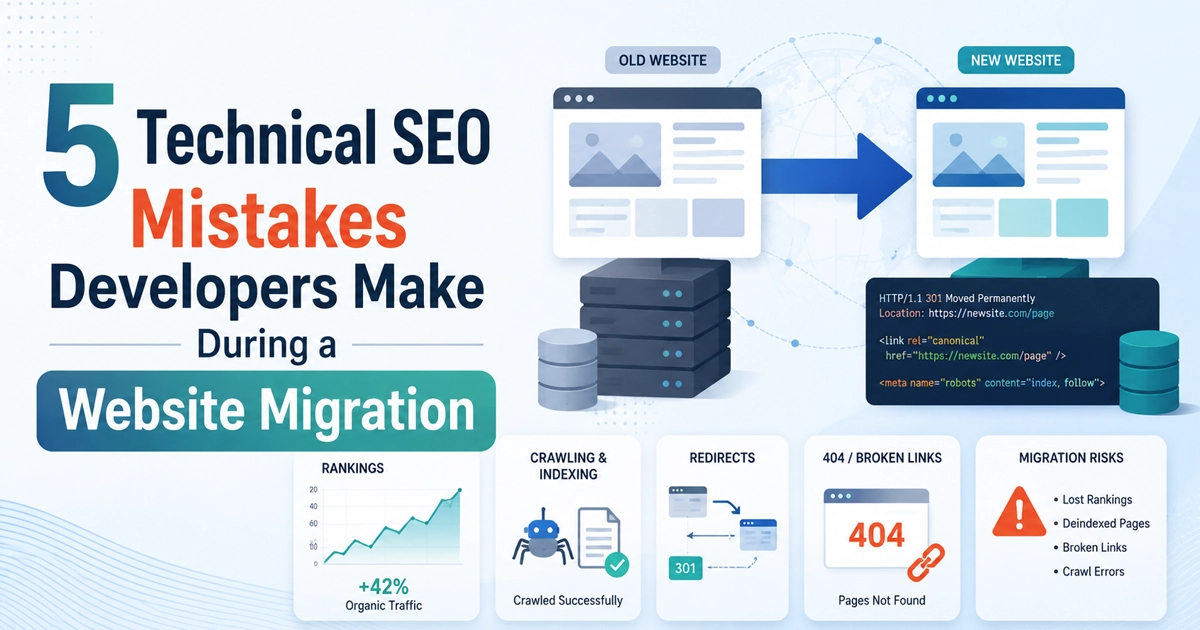
Website migrations carry significant risks to organic search visibility. Developers focus primarily on functionality and design during a launch, frequently overlooking critical technical search engine optimisation components. Mezzex understands that a poorly executed transition wipes out years of organic growth overnight. One wrong redirect or a misplaced noindex tag effectively vanishes your presence from the search results. A successful launch requires strict alignment between the development team and search engine optimisation specialists. Our Mezzex digital marketing services align technical development with organic growth strategies, ensuring your digital assets remain protected during complex transitions. This guide highlights five technical SEO mistakes developers make during a website migration, helping you safeguard your rankings and maintain a competitive edge.
1. Botching the 301 Redirect Maps
- Developers frequently implement wildcard redirects instead of mapping URLs on a strict one-to-one basis.
- Generic site-wide redirects confuse search engines and degrade the user experience significantly.
- Sending visitors searching for a specific product directly to a generic homepage creates immediate bounce rates.
- Failing to implement redirects entirely causes massive 404 error spikes across the domain.
- Search engines drop pages returning a 404 status code from their index completely.
- These unresolved errors immediately destroy historical link equity built over several years.
- Link equity dictates the authority and ranking potential of your specific web pages.
- Implementing redirect chains reduces crawling efficiency and wastes valuable crawl budget.
- A redirect chain forces search engine bots to follow multiple hops before reaching the final destination.
- Search algorithms abandon the crawl path after encountering three consecutive server hops.
- You lose the ranking power of the original URL when the bot fails to reach the final destination.
- Mapping every legacy URL to its exact new counterpart preserves organic visibility and user intent.
- We use premium crawling software to extract every single URL from the legacy database.
- Our team matches these legacy URLs directly to the new site architecture before the launch date.
- This meticulous preparation guarantees a seamless transition for search engine bots and human visitors.
- Developers must test the server response codes of every redirect rule before the site goes live.
- Broken redirect rules cause infinite loops, crashing the server and blocking users entirely.
- Implementing server-level redirects using the htaccess file ensures the fastest response times.
2. Pushing Staging Blocks to Production
- Developers build new websites in a private staging environment to test functionality safely.
- They intentionally block search engines from crawling these staging sites to prevent duplicate content issues.
- Leaving a staging environment accessible to search engine crawlers creates an immediate duplicate copy of your live website.
- Search algorithms penalise domains hosting identical content across multiple subdomains.
- Conversely, developers frequently forget to remove the noindex tag when pushing the staging site to the live production environment.
- This specific oversight effectively deindexes the entire new website within a matter of days.
- A noindex directive explicitly orders search engines to drop the page from their search results immediately.
- Developers also forget to update the robots text file to allow search engine access.
- An overly restrictive robots text file blocks bots from rendering cascading style sheets and essential site architecture.
- Failing to render these visual assets signals a broken user experience to search algorithms.
- Running a comprehensive site audit using premium search engine optimisation software flags these critical crawling blocks.
- You need to verify the indexability status of every template immediately upon launch.
- We monitor the server logs directly after a migration to confirm search bots crawl the new pages successfully.
- Our protocol ensures developers strip all staging blocks before the domain switch occurs.
- Validating the canonical tags on the new production environment prevents self-sabotage.
- Incorrect canonical tags pointing back to the staging URL confuse the indexation process completely.
3. Forgetting to Update Internal Links
- Internal links dictate the flow of authority throughout your website architecture.
- Developers update the visual navigation menus while leaving legacy internal links pointing to the old URL structures within the body content.
- This oversight creates unnecessary internal redirects across the entire domain.
- Forcing users and bots through an internal redirect slows down page loading times significantly.
- Page speed acts as a direct ranking factor for mobile search results.
- Relying on permanent redirects for internal navigation wastes the crawl budget entirely.
- Search engines allocate a specific crawl budget to your domain based on overall authority.
- Wasting this budget on internal redirects prevents bots from discovering new blog posts and product updates.
- Replacing old URLs with direct links to the new destination URLs ensures search engine crawlers navigate the site efficiently.
- You need to scan the entire database using enterprise software to identify legacy links.
- Updating these links manually requires immense time and strict precision.
- Executing search-and-replace queries in the database expedites this process for massive enterprise websites.
- Clean internal linking establishes a logical hierarchy for the new site architecture.
- We map internal link structures before development begins to maintain optimal authority distribution.
- Fixing broken internal links reduces the friction users experience during their browsing session.
- A logical internal linking structure pushes link equity to your most important sales pages.
4. Losing Established Metadata and Schema
- Database migrations frequently fail to carry over existing title tags, meta descriptions, and image text.
- Title tags remain the strongest on-page ranking signal for search engine algorithms.
- Losing optimized title tags drops organic rankings for core target keywords immediately.
- Blank meta descriptions reduce organic click-through rates from the search engine results pages.
- Missing image text destroys organic visibility in image search results and violates digital accessibility standards.
- Developers often drop established Schema markup during template redesigns.
- Schema markup translates complex page data into a language search engines understand natively.
- Removing this structured data eliminates the rich snippet eligibility driving high click-through rates.
- Losing review stars, frequently asked questions dropdowns, and product pricing snippets reduces your visibility against competitors.
- This data loss forces search engines to reinterpret every single page on the domain.
- Reinterpreting the entire website causes extreme ranking volatility for several months.
- You need to export all metadata and structured data from the legacy website before the migration begins.
- We compare the staging environment against the legacy export to verify all metadata transfers accurately.
- Our quality assurance process guarantees no optimisation work gets left behind in the old database.
- Developers must integrate dynamic variables into the new content management system to auto-generate baseline metadata.
- Validating the structured data using official testing tools ensures the code functions correctly upon launch.
5. Mishandling XML Sitemaps Post-Launch
- The XML sitemap acts as a direct roadmap for search engine crawlers.
- Launching the new site without generating a fresh XML sitemap delays the indexation of new URLs.
- Search engines rely on this file to discover new content and understand the website hierarchy.
- Developers often remove the old sitemap immediately upon launch to clean up the root directory.
- Removing the legacy sitemap prematurely harms the domain transition process.
- Keeping the old sitemap active temporarily forces Google to crawl the legacy URLs.
- Crawling the legacy URLs ensures search engines process the new redirect rules faster.
- Processing these redirects transfers the historical authority to the new URLs efficiently.
- You need to submit the new XML sitemap to Google Search Console the exact moment the site goes live.
- Monitoring the index coverage report identifies crawling anomalies in real-time.
- We maintain two separate sitemap indices during the initial launch phase.
- One index points to the old URLs, and the other points to the new architecture.
- We remove the legacy sitemap only after search engines index the new URLs completely.
- This dual-sitemap strategy accelerates the recovery of organic traffic following a major domain transition.
- Pinging search engines directly alerts them to the updated sitemap files instantly.
- Keeping the sitemap files free of broken links and redirects maintains a pristine crawl profile.
Partner With Us to Protect Your Rankings
Don’t risk your organic search performance on a poorly managed website migration. Transitioning your domain requires expert technical oversight to ensure every redirect, metadata element, and indexing signal is handled with precision. Our Mezzex SEO team provides the hands-on technical management necessary to safeguard your historical authority and accelerate your new site’s performance. Are you ready to launch with confidence? Let our experts handle the complexity of your migration. Book our professional SEO services today to secure your digital future. Contact our strategy team directly at +44 121-6616357 or send a detailed enquiry to [email protected] to start your project. You can also visit to view our full range of solutions and request a consultation. Protect your growth and let us drive your success.