App-Development
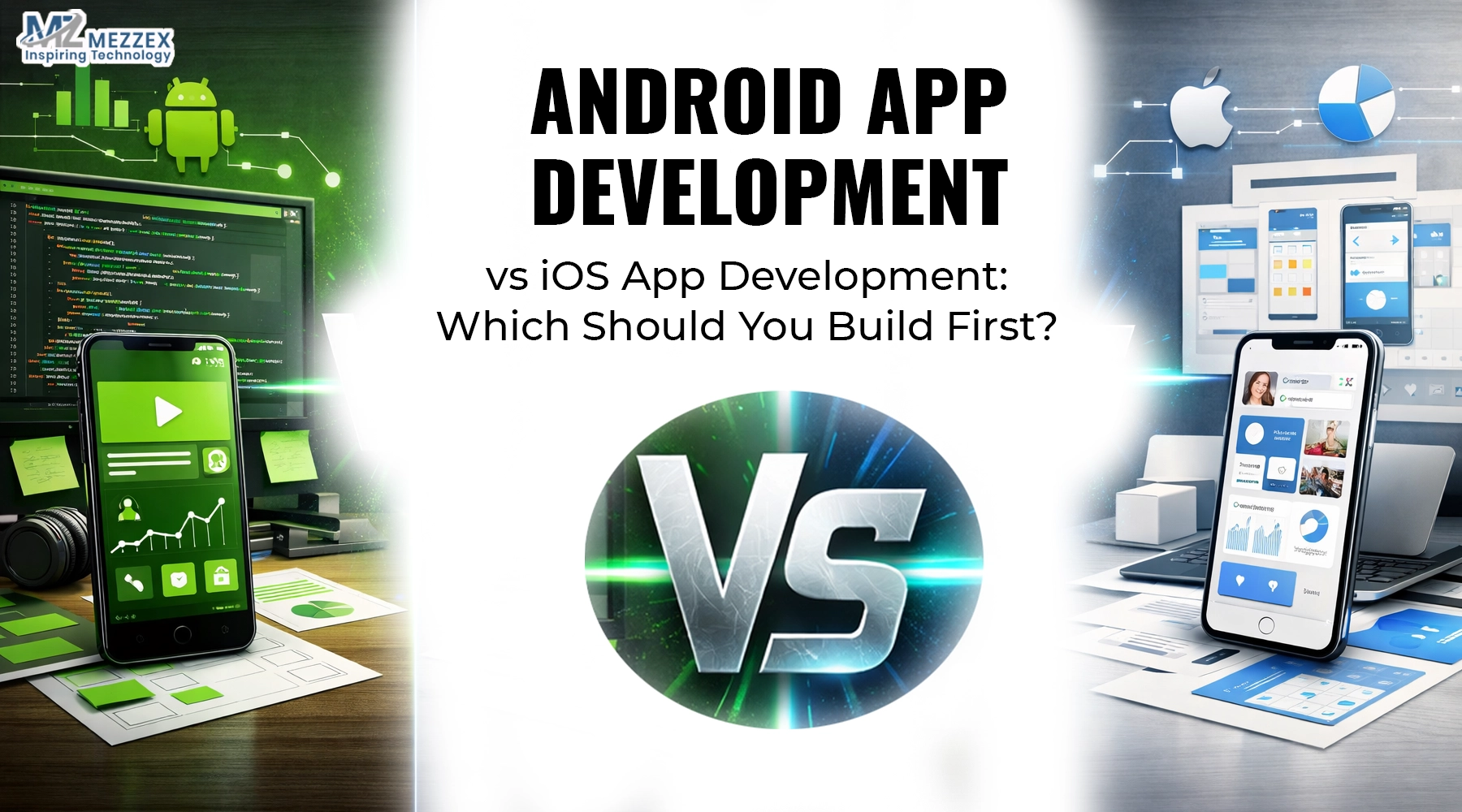
Android App Development vs. iOS App Development: Which Should You Build First?
Your app solves a real customer problem and aligns perfectly with your business model. But the first platform decision forces you to choose between two paths with different audiences, budgets, and timelines. Building for both Android and iOS simultaneously doubles the workload and risks wasting resources on unproven features. Founders often choose the wrong first platform by guessing at user behaviour rather than analysing their target market. This guide walks you through the decision factors — audience, revenue potential, development costs, testing realities, and scaling strategy — so you launch on the platform that delivers results fastest.
Your audience determines the first platform
- Android users outnumber iOS users globally by a wide margin, with billions of active devices across price points from budget phones to flagship models.
- Businesses targeting emerging markets, broad demographics, or users who prioritise affordability choose Android first because the platform reaches more people in more locations.
- iOS users represent a smaller but more concentrated group, concentrated heavily in North America, Western Europe, and urban areas of other regions.
- Premium brands, subscription services, and products requiring high engagement per user often launch on iOS first because these customers show a stronger willingness to spend.
- Local service apps, social platforms, and utility tools that need a geographical spread benefit more from Android's larger install base.
- Mezzex builds native apps for both platforms, so your technical team can execute whichever strategy matches your customer acquisition plan.
iOS first works when speed and revenue matter most
- Apple maintains strict control over hardware, creating fewer device variations and screen sizes for developers to test across.
- Developers complete iOS builds faster because they optimise for 20-30 current models rather than hundreds of Android configurations.
- The App Store approval process follows predictable guidelines, so teams rarely face unexpected rejections that delay launch dates.
- iOS users spend three times more on apps than Android users, making the platform ideal for validating paid download or subscription models early.
- A fitness app charging £9.99 monthly generates revenue faster on iOS, funding Android expansion once the product proves demand.
- Mezzex delivers complete iOS solutions, including iPhone, iPad, Apple Watch, and Apple TV apps with full testing across Apple's ecosystem.
Android first suits volume-driven business models
- Google Play serves 2.5 billion active devices, giving apps instant access to users across income levels and geographies.
- Delivery services, marketplace platforms, and ad-supported utilities gain traction faster on Android because sheer download volume drives network effects.
- Android's open ecosystem lets developers push updates immediately without waiting for store approval, perfect for rapid feature iteration.
- Emerging markets like India, Brazil, and parts of Africa show Android penetration rates above 90%, making it essential for global expansion.
- A ride-sharing app needs thousands of drivers and riders interacting daily to succeed; Android delivers that user base faster.
- Mezzex constructs robust Android solutions covering phones, tablets, TVs, and wearables optimised for diverse hardware specifications.
Development costs reveal the real platform trade-offs
- iOS development requires Swift or Objective-C with Xcode, Apple's integrated development environment that handles most compatibility issues automatically.
- One iOS developer can often handle the full stack because Apple's unified hardware reduces the need for extensive device-specific testing.
- Android demands Kotlin or Java with Android Studio, plus manual optimisation across processor architectures, screen densities, and manufacturer skins.
- Android projects consume 25-40% more QA hours because teams test against Samsung, Xiaomi, OnePlus, Google Pixel, and dozens of mid-range models.
- iOS-first saves 20-30% on initial development budget, letting startups validate the product-market fit before tackling Android complexity.
- Mezzex structures projects with clear planning, prototyping, and testing phases regardless of platform choice.
Testing realities shape your launch timeline
- Apple runs eight current iPhone models and four iPad generations, creating a manageable testing matrix for most apps.
- Developers verify iOS apps against specific iOS versions and device combinations, usually completing certification in 1-2 weeks.
- Android fragmentation spans thousands of device models, 24+ Android versions still receiving updates, and varying manufacturer implementations.
- One Android app requires testing across low-end processors, mid-range cameras, flagship displays, foldables, and tablets simultaneously.
- iOS launches hit the market 4-8 weeks faster, letting businesses gather revenue and feedback while Android teams handle compatibility matrices.
- Mezzex includes comprehensive User Acceptance Testing, bug fixing, and performance optimisation in every platform deliverable.
Revenue patterns favour different app strategies
- iOS users complete 70% more in-app purchases and subscribe at twice the Android rate, according to 2024 app analytics data.
- Premium apps charging £4.99-£19.99 per download convert better on iOS because users expect higher quality from Apple-branded devices.
- SaaS companion apps and professional tools target iOS professionals who value seamless integration across iPhone, iPad, and Mac workflows.
- Android excels with freemium models where the first 100,000 users generate ad revenue and social proof before premium upgrades matter.
- Gaming apps monetise better through Android's larger casual player base, willing to watch rewarded video ads.
- Your monetisation mechanic dictates platform priority more than development cost alone.
Cross-platform expansion follows first-platform success
- Successful apps launch on one platform, iterate based on real usage data, then port to the second ecosystem within 3-6 months.
- iOS-first products expand to Android using code-sharing frameworks like Flutter or React Native to accelerate the second build.
- Android-first apps leverage Google's Firebase suite for rapid scaling, user acquisition tools, and crash analytics across massive install bases.
- Progressive Web Apps bridge both platforms during expansion phases, delivering near-native performance through modern browsers.
- Mezzex transitions clients smoothly from single-platform launches to full cross-platform solutions, including enterprise web apps and custom portals.
- The first platform proves viability; the second captures untapped markets.
Choose Your First Platform Strategy Now
Android app development and iOS app development both deliver results when you match the platform to your business goals. You launch faster and spend smarter when the first build targets your highest-value users. Mezzex guides you through audience analysis, technical planning, and platform selection to ensure your app succeeds from day one. Our team builds native iOS apps for iPhone, iPad, Apple Watch, and Apple TV alongside comprehensive Android solutions for phones, tablets, TVs, and wearables. We handle prototyping, rigorous testing, bug resolution, and 24/7 post-launch support. Contact us at +44 121-6616357 or info@mezzex.com to discuss your app requirements and build the right platform strategy today.