Digital-Marketing
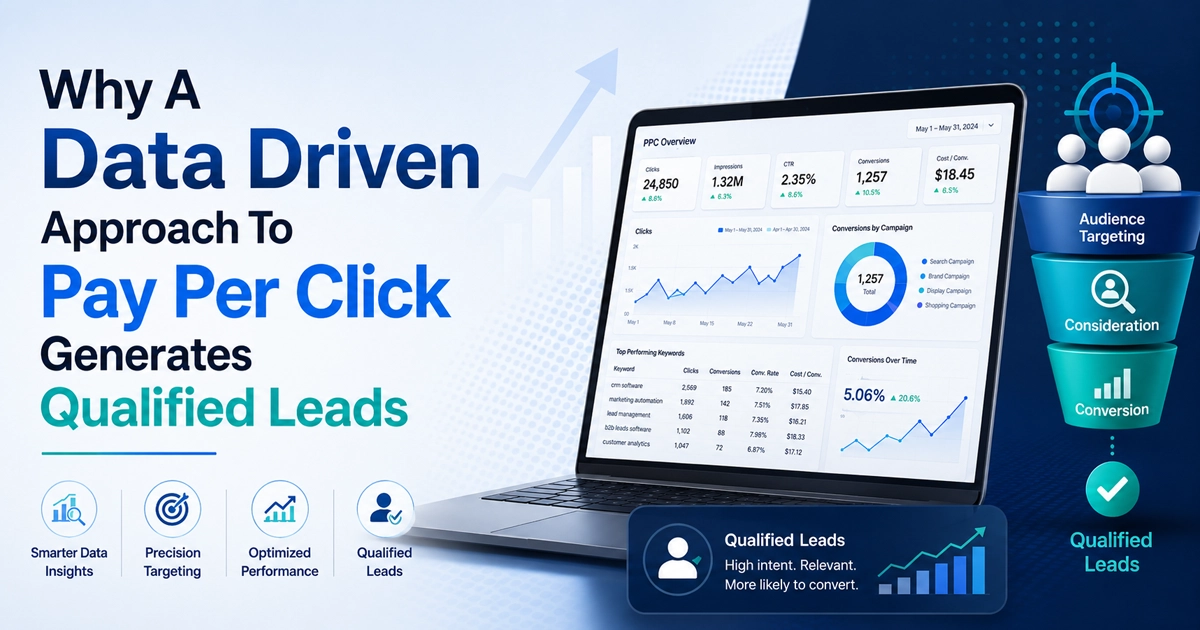
Why A Data Driven Approach To Pay Per Click Generates Qualified Leads
Your PPC account can look busy while your inbox tells a different story. The spend leaves daily, click numbers climb, and enquiries still miss the mark: wrong location, weak intent, low budget, or no real need. That gap appears when campaigns chase traffic instead of quality. A data driven approach to Pay Per Click starts with the question sales teams care about: who is likely to become a customer? It connects audience signals, search intent, advert wording, landing page behaviour, and conversion feedback, so paid campaigns attract people with a real reason to enquire and buy this month.
Start With The Buyer, Not The Campaign
- The campaign needs a clear target before the first advert runs: PPC works better when the business defines who it wants to reach. Location, service need, buying stage, budget range, and decision role all shape the setup.
- A wide audience rarely means a better audience: Broad targeting can fill reports with clicks from people who sit outside the offer. They may want a different service, live outside the target area, or lack the intent to speak to the sales team.
- Audience signals make the account more selective: Website visits, search behaviour, remarketing lists, customer profiles, device use, and location patterns help narrow the focus. This stops the campaign treating every visitor as equal.
- Better targeting improves the first conversation: A relevant enquiry usually arrives with context. The person understands the offer, fits the service area, and has a clearer reason to ask for help.
- Mezzex starts with audience insight: This matters because PPC success begins before ad copy, bids, and budgets. The campaign first needs to know who deserves the click.
Search Terms Reveal Real Intent
- Not every search shows the same level of interest: A person searching for “PPC tips” may want information. Someone searching for “PPC agency for ecommerce” shows a stronger commercial signal. The campaign should not treat both searches in the same way.
- High-intent searches deserve more attention: Terms linked to agency, management, quote, pricing, consultation, product type, location, or platform often show a user closer to action. These searches help paid campaigns reach prospects with a clearer need.
- Poor keyword choices create quiet waste: Broad terms can attract students, job seekers, free-tool hunters, and users looking for general advice. The account still spends money, yet the sales value stays weak.
- Search term reports expose wrong traffic: Real query data shows what people typed before they clicked. This helps identify phrases to keep, pause, or block.
- Negative keywords protect the budget: Excluding irrelevant searches keeps the campaign away from poor-fit visitors. It also gives stronger keywords more room to perform.
Advert Copy Should Set Expectations Early
- The advert acts as the first filter: PPC copy should make the offer clear before the click. It needs to tell users what the business does, who it helps, and what action follows.
- Generic copy attracts curiosity clicks: Broad phrases may sound polished, yet they often bring people with no strong intent. Clear service wording helps the right person recognise the fit sooner.
- Specific details reduce wasted clicks: Service area, platform, industry, lead time, price angle, or consultation type can qualify the user before they reach the landing page.
- The CTA shapes user behaviour: “Request a quote” suits someone close to a decision. “Book a consultation” suits a service conversation. “Speak to a PPC team” supports a consultative next step.
- Good copy helps the sales team later: When the advert explains the offer well, the enquiry starts with more context. The user knows what the company provides and why they clicked.
Landing Pages Decide What Happens After The Click
- The page needs to continue the same story: If the advert promises PPC management, the landing page should make PPC management clear straight away. A mismatch creates doubt and increases drop-offs.
- User behaviour shows where friction sits: Scroll depth, form starts, call clicks, page speed, time on page, and form drop-offs reveal which parts of the page help or hold back enquiries.
- Strong message match builds trust: The keyword, advert headline, page heading, service explanation, proof points, and CTA need to work together. A single clear path supports action.
- Forms influence enquiry quality: A short form may increase volume. A more specific form can ask about budget, website, service need, timescale, or business type. The right form depends on the sales process.
- The page should qualify, not only collect: A good landing page helps users decide if the offer fits their situation before they submit an enquiry.
Tracking Shows Which Enquiries Deserve More Budget
- Clicks do not show business value on their own: A form fill, phone call, quote request, purchase, and consultation booking all carry different value. Tracking needs to separate these actions.
- Lead volume can mislead: A campaign may produce many enquiries and still fail if those enquiries do not match the company’s service, budget range, location, or sales process.
- Sales feedback improves the campaign: Sales teams know which enquiries progress and which ones waste time. Feeding that insight back into PPC helps refine targeting, copy, keywords, and forms.
- Budget should follow stronger outcomes: When tracking shows which campaigns produce useful enquiries, spend can move towards those sources. Low-value traffic loses priority.
- Mezzex focuses on clear results: Pay Per Click management needs reporting that connects spend with real outcomes, not surface-level activity.
Optimisation Keeps The Account Moving In The Right Direction
- PPC does not stay still: Search demand changes, competitor bids move, costs shift, and customer behaviour changes. A campaign needs regular review to stay accurate.
- Small fixes remove wasted spend: Search terms, devices, locations, bids, schedules, audiences, placements, copy, and landing pages all reveal areas for improvement.
- Testing gives the account better options: Different headlines, CTAs, forms, offers, and page layouts can change enquiry quality. Testing shows which route creates stronger conversations.
- Performance reviews reduce guesswork: Campaign changes work better when they come from search terms, conversion records, call outcomes, form behaviour, and sales notes.
- Regular improvement builds a stronger account: One change rarely solves everything. Repeated review helps the campaign become more focused and more useful month by month.
Platform Choice Changes The Type Of Lead You Attract
- Google Search suits active demand: Search campaigns work well when users already look for a service, product, or solution. Keyword intent carries high importance here.
- Shopping campaigns suit ecommerce decisions: Product titles, images, price, stock details, and feed structure help buyers compare before the click.
- Display and Video support earlier-stage interest: These channels often work best with remarketing or audience targeting. They help keep the brand visible before a user returns with higher intent.
- Microsoft Ads adds another search route: Microsoft Search, Audience, and Multimedia Ads can help businesses reach users across another paid search environment.
- The right channel depends on the goal: Some campaigns need enquiries. Some need sales. Some need remarketing. Platform choice should follow business intent, not habit.
How Mezzex Turns PPC Into A Lead System
- Audience insight sets the direction: Mezzex uses customer understanding to shape targeting, so the campaign begins with buyer fit rather than traffic volume.
- Keyword research controls the route: Strategic keyword planning helps the account focus on searches with stronger commercial value.
- Creative development supports relevance: Ad copy and campaign messaging help attract users who understand the offer and know the next step.
- Ongoing optimisation keeps spend disciplined: Mezzex reviews campaign performance and adjusts activity based on results, not fixed assumptions.
- Multi-platform planning supports different journeys: Mezzex works across Google Ads and Microsoft Ads, including Search, Shopping, Display, Video, Audience, and Multimedia campaign formats.
The Real Aim: Better Enquiries, Not Busier Reports
- Qualified leads come from connected decisions: Audience targeting, search terms, advert copy, landing page flow, tracking, and optimisation all shape the quality of enquiries.
- A busy account can still perform badly: High traffic means little when users lack fit, intent, or reason to act. PPC needs commercial direction.
- Better enquiries support better sales conversations: A smaller group of relevant prospects often creates more value than a large pool of weak leads.
- A data driven approach keeps learning: Every search query, form entry, call record, and sales outcome gives the campaign another signal. Good PPC uses those signals to improve the next decision.
Book Our PPC Solutions With Mezzex
Book Mezzex PPC Solutions to build campaigns that focus on qualified leads, clearer enquiries, and measurable growth. Our team uses audience insight, strategic keyword research, creative campaign development, conversion tracking, and ongoing optimisation across Google Ads and Microsoft Ads. From Search and Shopping to Display, Video, Audience, and Multimedia campaigns, we shape paid traffic around your business goals, not empty clicks. Speak to Mezzex about Pay Per Click management that improves lead quality, supports better sales conversations, and gives you clearer reporting. Contact our PPC team at +44 121-6616357 to plan a campaign built for stronger enquiry quality and growth.