Digital-Marketing
Leveraging Short Form Video Content On Social Media To Engage Target Audiences
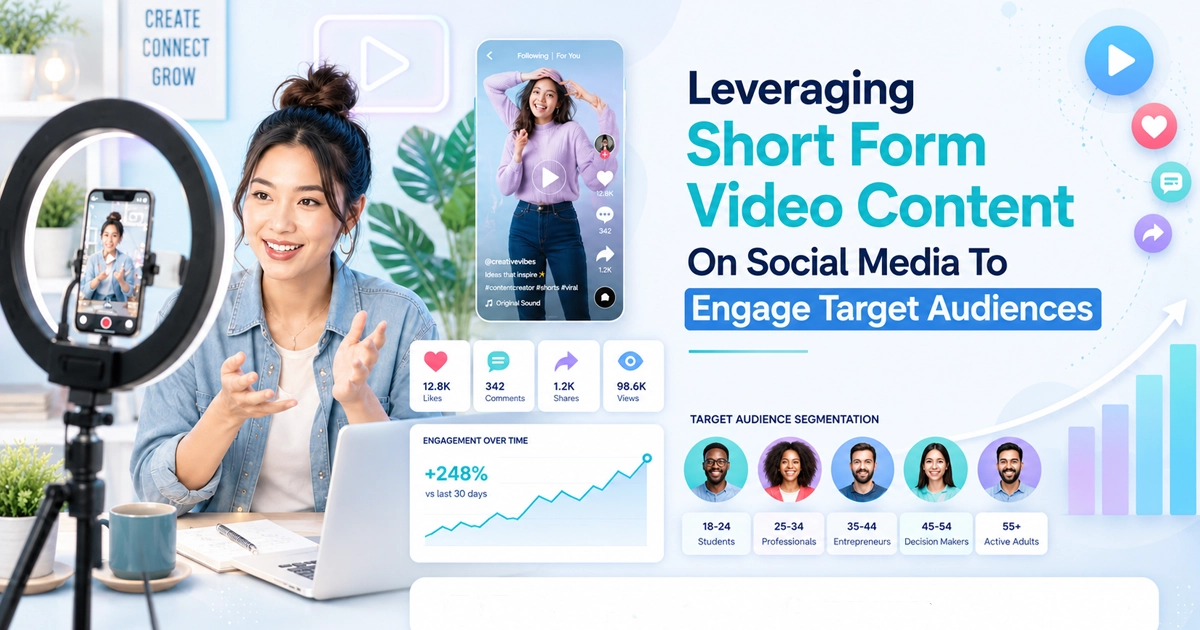
Most social media posts lose the viewer before the brand makes its point. The thumb moves, the feed changes, and the message disappears. Short form video gives brands a small window to earn attention, show relevance, and start a response. The format works because it matches how people use social media: quick checks, fast decisions, and little patience for slow explanations. For businesses, the aim is not to post random clips. It is to create short form video content with a clear audience, clear purpose, and clear reason for people to watch, react, click, or enquire.
Short Form Video Fits The Way People Use Social Media
- People make quick content decisions: Social media users rarely give brands much time at the start. They scan the first frame, read the on-screen text, and decide if the video deserves the next few seconds.
- Video explains faster than written posts alone: Movement, product use, facial expression, voice, captions, and on-screen text help people understand a message quickly. This makes short form video useful for service points, product benefits, quick tips, and brand updates.
- Short clips reduce effort for the viewer: A 15-second clip feels easy to start. It does not ask the user to commit to a long explanation before they know the value.
- The format supports repeated contact: One long message can become several shorter clips. A brand can introduce a problem, answer a question, show proof, and guide action across separate posts.
- Social media engagement starts with pace: Strong short form video respects the feed. It gets to the point early and gives the viewer a reason to stay.
Audience Insight Gives Each Video A Clear Angle
- The audience decides the message: A video for first-time buyers needs a different angle from a video for existing customers, industry contacts, local prospects, or people comparing suppliers.
- Pain points create stronger hooks: Useful short form video often starts with a problem the audience already recognises. That may include wasted time, unclear pricing, poor results, lack of trust, low confidence, or confusion before purchase.
- Buyer stage shapes the content type: Awareness videos introduce the brand. Consideration videos answer questions. Decision-stage videos show process, proof, results, customer concerns, or next steps.
- Customer language matters: Social media content works better when it uses the words people already use in comments, searches, reviews, and enquiries. This makes the message feel closer to the viewer’s own situation.
- Audience fit beats trend chasing: A trending format only helps when it speaks to the right people. A brand gains more value from relevance than from copying a trend that has no connection to its offer.
The First Few Seconds Need A Clear Job
- The opening needs a reason to stop the scroll: A hook can use a question, mistake, comparison, result, visual action, customer problem, or direct benefit. It needs to make the viewer think, “This relates to me.”
- Slow starts lose attention: Long logo intros, unclear visuals, generic greetings, and delayed context weaken the video. The brand can still appear, but the viewer needs value first.
- A good hook leads into one idea: Examples include “Stop doing this with your content”, “Here is why your posts get views but no enquiries”, or “Before you run your next campaign, check this first.”
- Visual movement supports the hook: A product in use, a screen recording, a face speaking directly, a fast before-and-after, or a workplace moment can make the video feel immediate.
- The first frame needs thought: The opening image, text, and movement carry the first job. They decide if the audience gives the content more time.
One Video Needs One Message
- Short form video cannot carry a full brochure: A clip works best when it focuses on one problem, one answer, one tip, one proof point, or one action.
- Too many points weaken memory: When a video tries to explain everything, the viewer often remembers nothing. A single message helps the audience understand the point and connect it with the brand.
- Simple structures help planning: Brands can use formats such as quick tips, myth corrections, product uses, service FAQs, founder comments, customer questions, behind-the-scenes clips, and short comparisons.
- Series content adds depth without clutter: A topic can become several posts. One clip covers the problem, another explains the mistake, another shows the solution, and another gives the next step.
- Clear content earns better engagement: Viewers respond more when the video tells them exactly what it means and why it matters.
Platform Style Changes The Creative Approach
- TikTok needs direct, native content: TikTok often rewards quick openings, natural delivery, sharp edits, trend awareness, and content that feels made for the platform.
- Instagram Reels suits visual clarity: Reels works well for product showcases, service explainers, quick tips, transformations, team content, and lifestyle-led brand moments.
- LinkedIn needs practical value: Short form video on LinkedIn often performs well when it shares process, opinion, industry insight, business lessons, proof, or professional advice.
- Facebook supports community and retargeting: Short clips can answer common questions, support paid social campaigns, keep existing audiences warm, and encourage comments from local or interest-based groups.
- Pinterest needs action-led visuals: Short video can guide users towards ideas, products, styling, projects, or plans when the visual message gives them a reason to click.
- One video rarely suits every channel without adjustment: The message can stay the same, but the edit, caption, opening, length, and CTA often need platform-specific planning.
Captions, Text And Sound Improve Watchability
- Many users watch without sound: Captions and on-screen text help the viewer understand the message in quiet settings, public spaces, offices, or late-night scrolling.
- Text should support, not crowd, the screen: A short headline, key point, or step label can guide the viewer. Too much text makes the video feel hard to follow.
- Sound adds personality: Voiceovers, natural speech, background audio, product sounds, and short spoken explanations can make the content feel more human.
- Readable design matters: Clear caption size, clean spacing, strong contrast, and simple pacing help more people follow the video without strain.
- Accessibility supports engagement: More people can watch, understand, and respond when the video works with sound on and sound off.
Consistency Builds Recognition
- One video rarely changes how people see a brand: Target audiences often need several interactions before they remember, trust, or contact a business.
- Recurring formats make content easier to produce: A brand can repeat useful structures such as weekly tips, customer questions, quick fixes, service explainers, team advice, and product demonstrations.
- Recognition grows through familiar signals: Colours, tone, presenter style, caption layout, filming style, and posting rhythm help users identify the brand faster.
- Content calendars reduce last-minute posting: Monthly planning helps brands connect short form video with campaigns, seasonal moments, product pushes, service themes, and audience questions.
- Consistency does not mean repetition: The brand can keep a recognisable style while changing topics, hooks, examples, and CTAs.
Performance Insights Show What The Audience Values
- Views alone do not tell the full story: A video can reach many people and still fail to create useful action. Comments, saves, shares, profile visits, clicks, enquiries, and watch time give clearer signals.
- Watch time exposes weak openings: If viewers leave early, the hook, pacing, topic, or first frame may need work.
- Saves and shares show usefulness: People often save content that helps them solve a problem or remember a point. They share content that feels relevant to someone else.
- Comments reveal future content ideas: Questions, objections, repeated phrases, and reactions can guide the next batch of short form videos.
- Reporting keeps strategy grounded: Mezzex uses performance insights to review content results across time. This helps brands improve social media marketing through audience behaviour, not guesswork.
How Mezzex Supports Short Form Video With Strategy
- Strategy sets the purpose: Mezzex helps brands plan social media around goals, target audiences, platform fit, and campaign direction.
- Content timing improves relevance: Monthly content planning helps brands post at better moments and connect videos with wider marketing activity.
- Creative content gives the campaign shape: Short form video, captions, copy, visuals, and social media ads need to work together so the audience receives one clear message.
- Platform-specific planning protects the content: Instagram, TikTok, LinkedIn, Facebook, X, and Pinterest each need a different style, pace, and user expectation.
- Performance review guides the next move: Results help shape future hooks, topics, formats, posting times, and campaign ideas.
Short Form Video Needs Purpose, Not Random Posting
- The format works when the message has direction: Short form video content engages target audiences when it speaks to a real need and gives the viewer one clear point to take away.
- Strong videos earn attention quickly: The opening sets the hook, the middle delivers the value, and the ending gives the next step.
- Audience fit carries more value than viral reach: A brand gains more from the right people watching and acting than from views that bring no useful response.
- Social media grows through planned learning: Brands improve when they create, publish, measure, adjust, and keep building content around what their audience actually does.
Book Social Media Marketing Support With Mezzex
Book Social Media Marketing Support with Mezzex to turn short form video into a planned content system. Our team helps you shape strategy, plan monthly content, create platform-ready videos, schedule posts at useful moments, and track performance across Instagram, TikTok, LinkedIn, Facebook, X, Pinterest, and paid social campaigns. We focus on audience engagement, brand recognition, traffic, and revenue outcomes, not posts for the sake of posting. Speak to Mezzex about social media marketing support that matches your goals, content needs, and target audiences. Contact our teamat +44 121-6616357 to plan your next social media campaign with clear direction, purpose, and focus.